
5 Signs Your Running Track Substructure Is Failing (And What to Do About It)
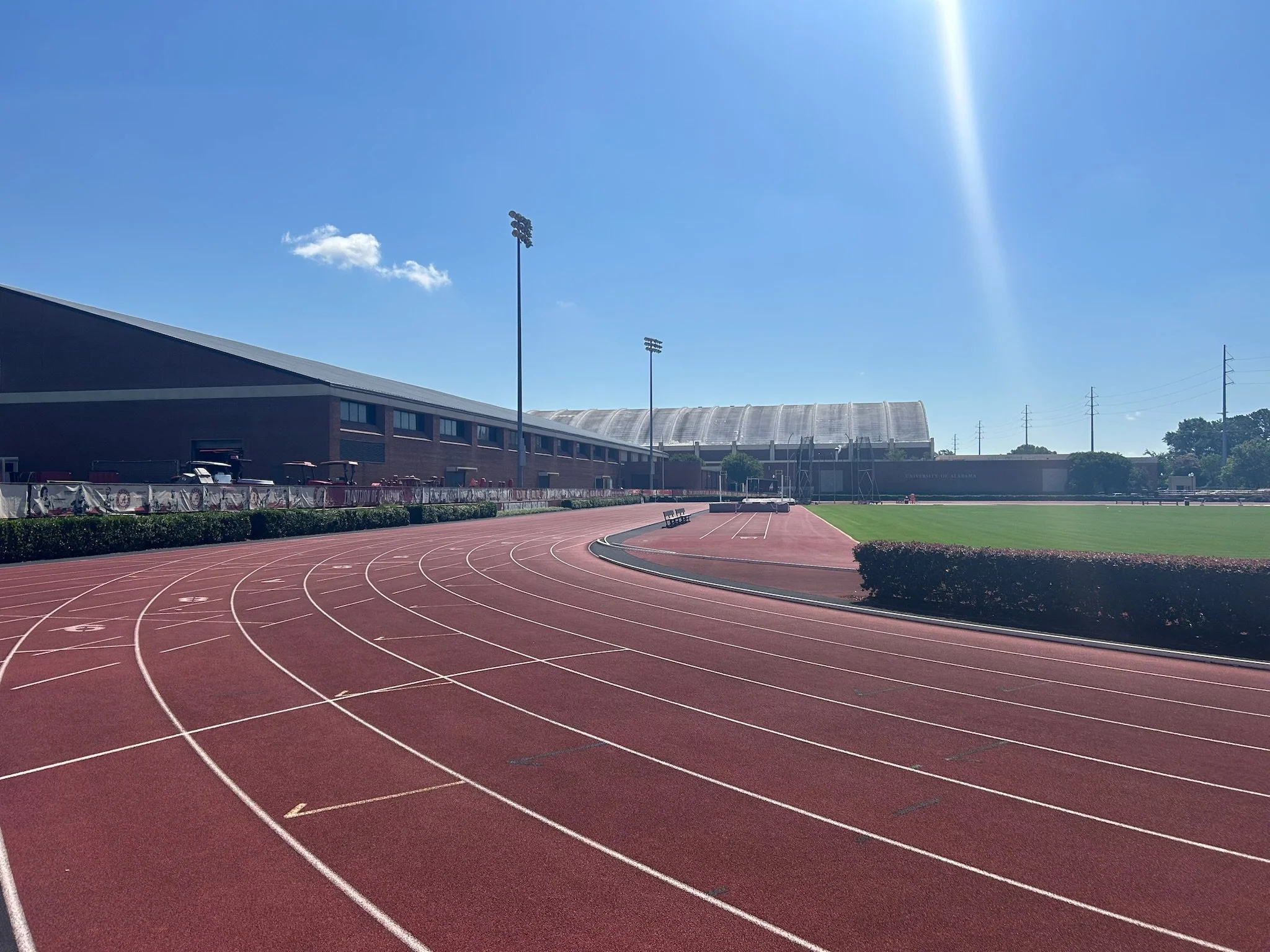
A running track can look fine on the surface and still be in serious trouble underneath. The polyurethane or latex surface is only as good as what's beneath it: the asphalt or concrete base, the drainage system, and the compacted sub grade that holds everything together. When that substructure starts to fail, the surface takes the blame, but resurfacing alone won't fix the real problem.
For facility managers, catching substructure failure early is the difference between a routine repair and a full reconstruction. Here are five warning signs to watch for, what's usually causing them, and when it's time to bring in a professional track contractor.
1. Standing Water After Rain
If puddles are forming on your track (especially in the same spots every time it rains) that's your first and most reliable red flag. Tracks are engineered with a slight cross-slope (typically 1%) to shed water toward the infield or perimeter drains. When water pools instead of running off, something in that drainage design has failed.
What's usually causing it:
Settling or heaving in the asphalt base, creating low spots
Clogged or damaged perimeter drains and catch basins
Subgrade erosion beneath the pavement, often from poor initial compaction
Surface wear that's flattened the intended slope over years of use
Why it matters: Standing water doesn't just create a nuisance or safety hazard for runners. It seeps into seams and cracks, freezes and expands in colder climates, and accelerates the breakdown of both the surface and the base beneath it. Left unaddressed, a small drainage issue becomes a much bigger structural one within a season or two.
2. Cracking That Reflects Through the Surface
Hairline cracks in a polyurethane surface are common and often cosmetic. But cracks that keep coming back after repair, run in straight or geometric patterns, or widen over time are usually reflective cracks, meaning they're mirroring a crack or joint in the asphalt or concrete base underneath.
What's usually causing it:
Thermal expansion and contraction in the asphalt
Inadequate base thickness or improper asphalt mix design
Tree root intrusion or subgrade movement
Aging asphalt that's simply reached the end of its structural life (typically 15–20 years)
Why it matters: Surface-level crack repairs are a temporary fix if the base is actively moving. If you're re-sealing the same cracks year after year, that's a sign the problem lives below the surface, not on it.
3. Bubbling, Blistering, or Surface Lift
If sections of the track surface are bubbling up, delaminating, or lifting away from the base, this points to a bonding or moisture problem between the surface system and the pavement it's applied to.
What's usually causing it:
Moisture trapped beneath the surface, often from a failed drainage system or vapor coming up through the base
Poor surface adhesion during original installation
Off-gassing from asphalt that wasn't properly cured before the surface was applied
Freeze-thaw cycles pushing trapped water and expanding the bond line
Why it matters: Surface lift is a safety issue as much as a cosmetic one: it creates uneven footing and trip hazards. It's also a sign that whatever is trapped beneath the surface (usually water) needs to be diagnosed and resolved before any new surface is installed, or the same failure will happen again.
4. Soft, Spongy, or Uneven Spots Underfoot
Runners and coaches often notice this before facility staff do: certain areas of the track feel softer, spongier, or noticeably different underfoot compared to the rest of the surface. This typically indicates the base beneath that section has lost structural integrity.
What's usually causing it:
Subgrade washout from poor drainage, creating voids under the pavement
Base delamination or separation from years of moisture infiltration
Original construction shortcuts, such as inadequate subgrade compaction or insufficient base depth
Why it matters: Soft spots are often the earliest physical indicator of a void forming beneath the pavement. Left alone, these areas are prone to further settling, cracking, and eventually visible depressions or potholes in the track surface.
5. Visible Settling, Dips, or Birdbaths
If you can see a low spot or depression in the track — sometimes called a "birdbath" because water collects and sits in it like a shallow basin — the base has settled unevenly. This is one of the more advanced stages of substructure failure and is rarely something a surface coating can correct.
What's usually causing it:
Long-term drainage failure that has eroded material beneath the pavement
Inconsistent or inadequate compaction during original construction
Age-related consolidation of the subgrade, especially in tracks built on fill soil
Heavy equipment or vehicle traffic on the track surface over the years
Why it matters: Depressions change the way water moves across the entire track, often triggering or worsening the drainage problems in sign #1. At this stage, the issue has typically progressed from the base into the subgrade, which usually means excavation and reconstruction rather than a resurfacing project.
When to Call a Professional
A quick coat of sealant or a patch job can mask these symptoms for a season, but if you're seeing more than one of the signs above, it's worth getting a professional assessment before budgeting for a simple resurface. A qualified track contractor can core-sample the base, evaluate drainage flow, and tell you whether you're looking at a surface-only repair or a substructure rebuild.
Bring in a pro if:
Standing water returns to the same spots season after season
Cracks reappear in the same location after repair
You notice bubbling, lifting, or soft spots in more than one area
The track is approaching or has passed the 15–20 year mark on its original base
You're planning a resurface and want to confirm the base can support it
Catching substructure problems early can mean the difference between a targeted drainage or base repair and a full-depth reconstruction. The earlier a qualified team can inspect and diagnose the issue, the more options (and budget) you'll have to fix it right.
Concerned about the condition of your track's substructure? Sunbelt Sports offers professional track evaluations to help facility managers understand exactly what's happening beneath the surface and what it will take to fix it. Contact us to schedule an assessment.